|
|
|||||||||||||||||||||||||||||||||||||||||||
Skeg, Rudder, and Helm
Rudder Steering Gearbox
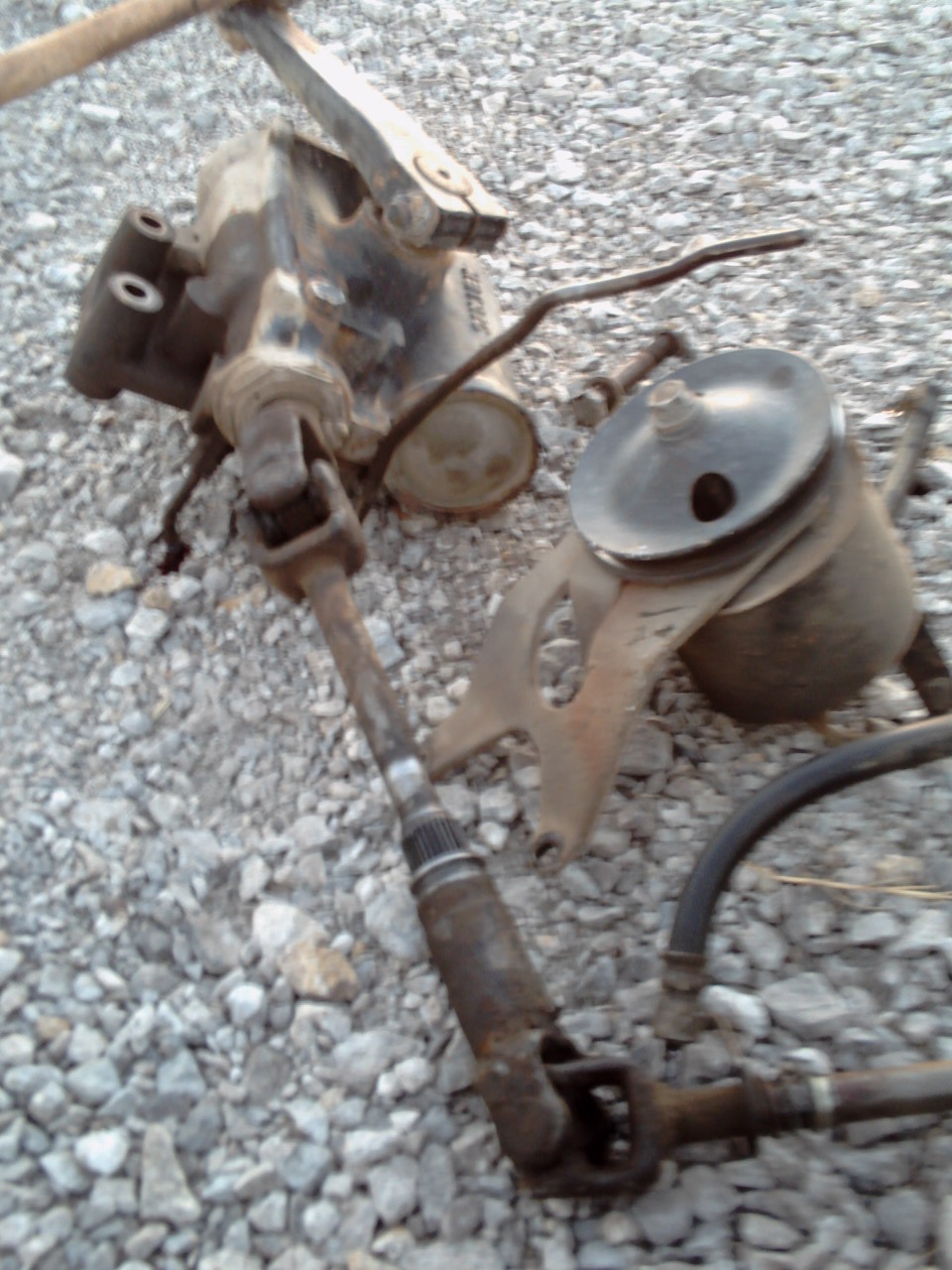
While cutting our school bus apart I noticed that huge steering gear box with it's 2" splined steel shaft. If it can steer a 7 ton bus on land, it shouldn't it be able to steer a 40 ton boat on water? Unfortunately No! It would be great for a 6 ton boat with a 2" rudder post, but when we ran our numbers through the calculations in Dave Gerr's "Boat Mechanical Systems Handbook" our 40 ton, 65' water line boat with a 23 square foot rudder, needs rudder post in excess of 4 1/2 inch diameter bar that can take over 7 tons of force and 21,000 foot pounds. If you get at all nervous about boat building decisions then looking at rudders will likely make your head explode. The real killer is they are not like anchors. You can trade this part out easily. My only advice is keep in mind how you are going to use your boat. For us, Seeker is a work boat. Towing, hauling cargo, maneuverability, and ruggedness are top of the list. Meaning that speed under sail is going to take a hit.
One answer to tight turns is the articulating rudder. The make for impressive turns but the down side is the additional moving parts and the maintenance that come with that. Their other down side is that they work very poorly in reverse.
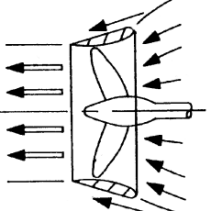
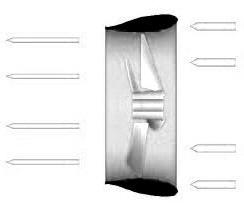
The next big idea was a Kort nozzle. That idea quickly was put aside because we're building a sailboat, not a tug boat. ...but it kept coming back. Generally if you have never seen someone else do it then it's a bad idea, but this one persisted. But not as a Kort Nozzle or a Rich Nozzle but as a simple propeller shroud. Kort and Rice Nozzle are both have flared openings so my thought is that they will have considerable more drag than just a shroud which is nothing more than a pipe.
Ducted propellers, even simple pipe like propeller shrouds become much more interesting when they are steerable. True, we will not realize the 15 to 20% increased thrust offered by a nozzle, but even a simple duct can boast a 10% increase, and there are plenty of additional advantages. * 10% more thrust
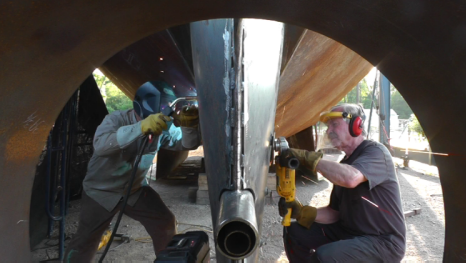
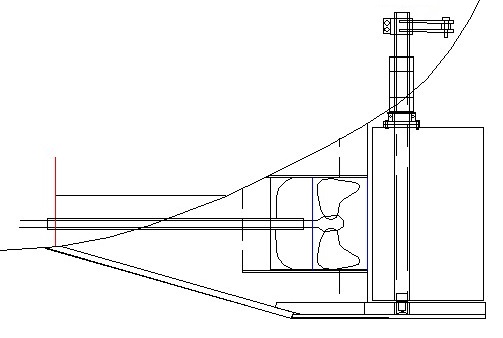
On second thought, Kay and I decided we wanted the propeller shroud fixed to the skeg and a Fish Tail rudder foil trailing behind. The idea is to increase the reliability. The shroud to blade tip clearance is only 3/16". If the cup bearing beneath the rudder were to wear just 3/16" then the blades would have started striking the shroud. With them separate if we have damage to the shroud, we can cut it way, replace or repair the blades if needed and be on our way. If it's par of the rudder, we be left with a very weak rudder once the shroud was removed. The dead wood or shoe extended out under the rudder is being debated. If it takes a hard it, it will bend and jam the rudder, but then it might save the rudder's ass too.
One other option, just because it's so unique, is the "active rudder". A hydraulic motor, controllable pitch propeller and Kort nozzle are build into the rudder which can swing 65 degrees to both sides giving the vessel great maneuverability and station keeping ability. This example is on the Canadian Cost Guard vessel - TANU
Fishtail Rudder
Fishtail Rudder
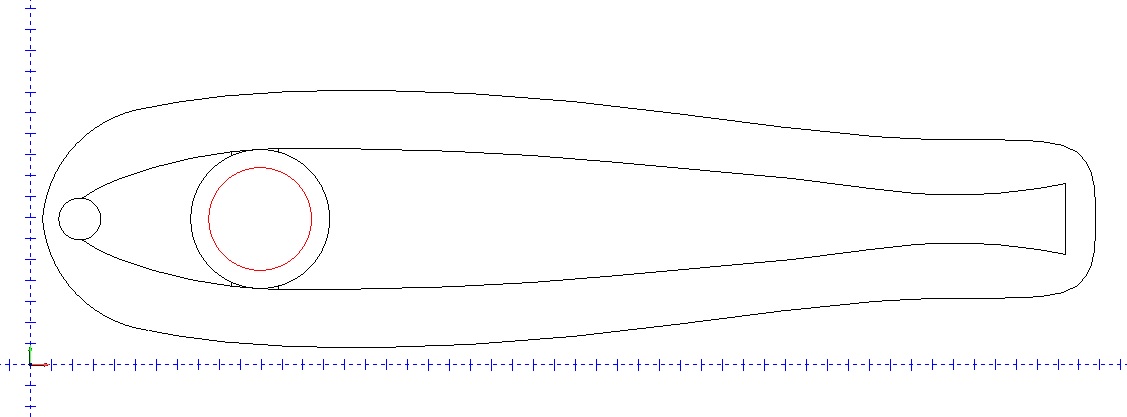
We selected to use a "fishtail rudder" straight out of Dave
Gerr's Boat Mechanical Systems Handbook. There are two
advantages we like about the design. First is maneuverability.
Most rudders, stall and become useless once they are turned more
than 33 degrees to either side. But the fishtail rudder can be
turned 45 degrees before it stalls. Secondly, as a workboat we
run the risk of bumping into things like a rocks. The large
forward width of the fishtail rudder allows us to use a very strong
6 inch diameter XXHW rudder post. While we may damage the
rudder's surface, we will not likely harm the rudder post which will
make repairs much easier.
We cast a rudder collar that clamps to the rudder post and seats against the rudder tube mounted into hull, preventing the rudder from being pushed up into the hull. When the rudder need to be removed the collar is first removed, then the flange bolts are removed and the rudder raised up 4 inches until the pintle clears the rudder cup and the rudder is shifted sideways, clear of the cup. The three, 3/8" thick pad eyes on the transom and two on the top plate of the rudder allow for the 1000 pound rudder to be easily managed with 3 leaver chain hoist. When in the water the hollow rudder displaces 600 pounds dropping its weight to 400 pounds. The void inside the rudder is air tight so no rusting of the inside will stop once the available oxygen is depleted.
Steering Systems
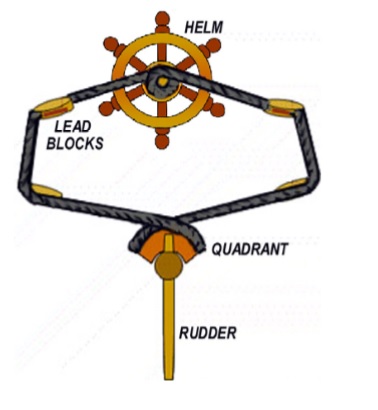
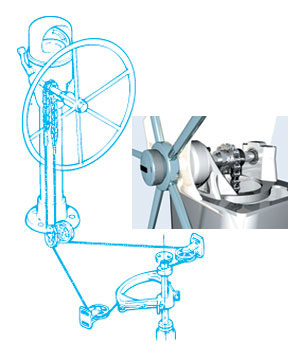
Chain and CableThe old school approach of chain an cable is an interesting approach, because the parts can be built from scratch. The down side is routing the cables, but in our case that will be easy to do. And any power assist or autopilot system will have to actually turn the helm wheel. But while that is a little dangerous, it is a great visual feed back for the auto pilot. We got a spec of a chain and cable system from Edson Marine. Edson_Marine_Helm_Specification It calls for a 2:1 reduction gear on a 48" helm with 9.9 turns for a 90 degree swing. The sprocket diameter is 2.43" and the quadrant radius is 24". And the force on the wheel is 33 pounds cursing and 44 pounds surfing. The Edson_Chain_and_Wire_Steering_Systems and Edson_Chain_and_Wire_Grear_Reduction documents contain information to design your own system. |
























































|
|
|
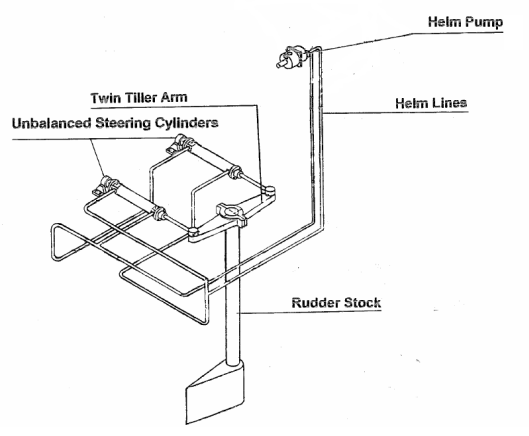
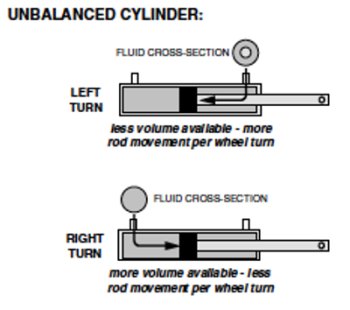
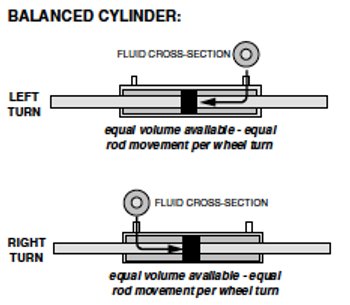
But unbalanced cylinders are more common and if you simply use two unbalanced cylinders you get the same effect and you can plumb around one failed cylinder and still have use of your hydraulic steering.
The rudder is designed to take over 21,000 foot pounds.
Pumps:
Kobelt
Helm Pump Model 7012
Variable Displacement 4 - 12 cu . in 1000 psi
$2000 from
www.seatechmarineproducts.com
SeaStar Capilano 1350 / Teleflex-HH0426 8 Cubic in. 1.25in.
Straight Shaft $2500 from
www.seatechmarineproducts.com
Teleflex HH5275, Model 1275V, 2.7 - 5.4 Cu.
In.
Cylinders:
www.surpluscenter.com/Hydraulics/Hydraulic-Cylinders/Double-Acting-Hydraulic-Cylinders/3x16x1-50-DA-HYD-CYL-LION-30LH16-150-3000-PSI-9-8262-16-S.axd
3 x 16 x 1.5 @ 1000 psi = 7069 lb push and 5301 lb pull
or 12,370 combined. 16,400 ft pounds
pi * (3/2)^2 * 16 * 2 = 226 cu in
Kobelt Helm Pump Model 7012 226 / 12 = 18.8 turns @ 45
degree or 14.6 @
35 degrees.
Unbalanced Model 7087
- Rudder Angle 45°; 22,400 ft/lb;
Bore 3 1/2” x 16" Stroke 269 cu in
pi * (3.5/2)^2 * 16 * 2 = 307 cu in
Turns with Teleflex HH5275, Model 1275V, 2.7 - 5.4 Cu.
In. 269/ 5.4 cu in = 49.8 turns
Turns with Pump 7012: 269 / 12 = 22.4 35 degee = 17
SeaStar
www.seastarsolutions.com/products/hydraulic-new/inboard-new/hynautic-new/
14.2 turns, Hynautic Pump H-41 5.50 cu.in., 950 psi
Cylinders: Two: K-8, replaced by HC5806, 9" stroke, 2.5" bore,
10,308lbs, 5510 ft/lbs, 74.33 cu.in. displacement
Resources
www.baumhydraulics.com/calculators/cyl_calc.htm
www.kobelt.com
www.rudderpower.com
www.bayviewengineeringind.com
Rules of Thumb
For manual hydraulic systems, under normal conditions, the load on the steering wheel rim should not exceed 36 ft. lbs. (16 kg), and generally the hydraulic system pressure should not exceed 650 psi (45 bar) for small helm pumps or 400 psi (30 bar) for larger versions. --Kobelt
Various Rudder Area Size Calculations
A rudder area of between 8 and 10 per cent of the total lateral
plane or underwater profile is the desirable size for a sailboat.
Seeker is about 304 sq feet * .08 = 24.6 sq ft Down to 6% will
do for rudders with high aspect ratios. (Tall)
With a skeg in front of a rudder, up to 12% of the rudder can be
considered to be on the skeg. Unless the skeg is 80% of the
rudder area and then it no longer counts because it acts more like a
long keel.
The submerged portion of the rudder is typically 1% to as much as
2% of the sail area.
Seeker has 2196 sq ft of sail, which would be 22 to 44 sq ft of
rudder. Seeker's rudder is 20 sq ft.
Displacement Boat Rudder Area = .03 to .04 * Waterline Length *
Draft Including Keel: Seeker is 12 to 16
Traditional Full Long Keel = .068 * Waterline Length * Draft
Including Keel: Seeker: 26.52